
team
PM, 3 Devs
Platform
Enterprise B2B
TL;DR
Made managing large source inventories practical by simplifying source onboarding, organization, and maintenance.
Background
Enterprise environments were growing, requiring administrators to manage significantly larger source inventories.
Problem
Source management relied heavily on manual, repetitive actions that became difficult to maintain at scale.
Aprroach
Analyzed existing workflows, identified where effort increased with scale, and designed new workflows for onboarding, organizing, and managing sources.
outcome
Introduced Bulk Upload, Tags, and Source Groups to make large-scale source management practical and maintainable.
Impact
BEFORE: Managing a growing number of data sources required significant manual effort.
AFTER: Managing large source inventories became faster, more structured, and easier to maintain.
01 CONTEXT
Understanding Ironstream
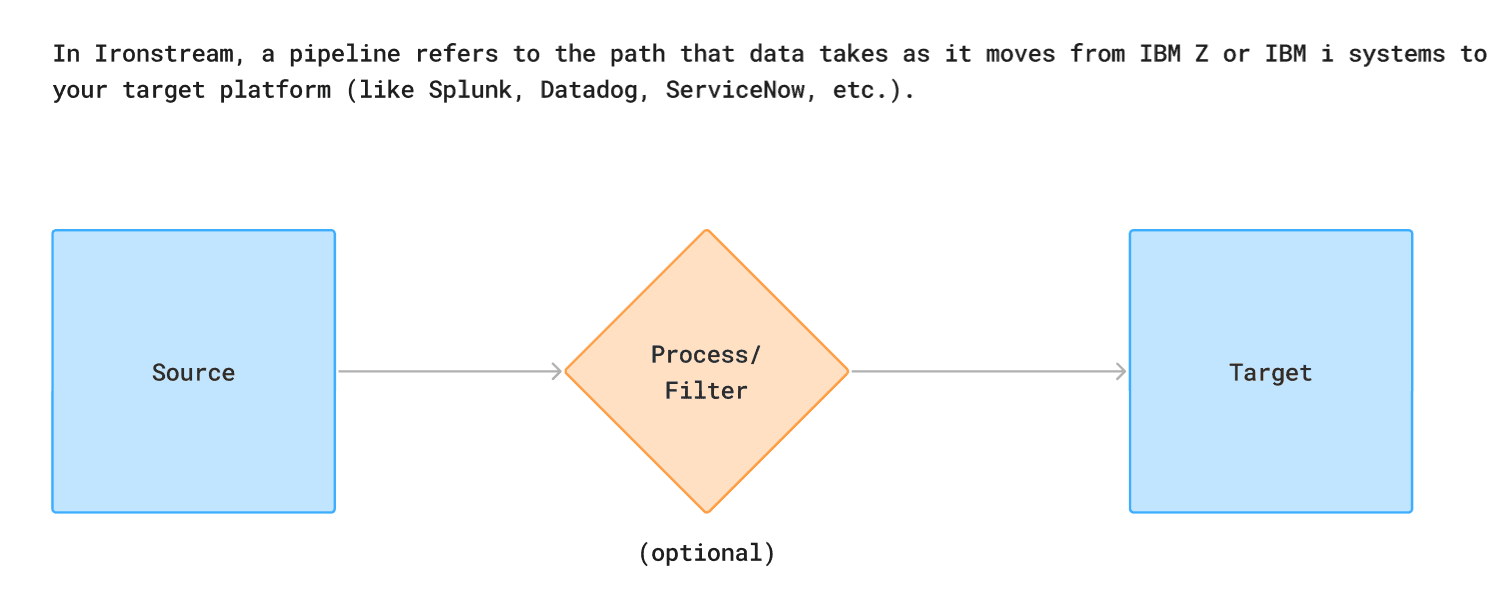
Ironstream is an enterprise data integration platform that helps organizations collect, transform, and route operational data from IBM i and IBM z environments to modern monitoring, analytics, and security platforms.
Its users include system administrators and operations teams responsible for managing large environments and ensuring the right data is available where it is needed.

Where Sources Fit Into The System
Administrators configure Sources to define what data should be collected from IBM i environments.
As monitoring needs grow, so does the source count. A single pipeline can hold hundreds of source configurations, each needing setup and ongoing maintenance.
A handful of sources is straightforward to manage. Hundreds is a different problem entirely.
02 PROBLEM
Creating Sources Wasn't Difficult
The existing workflow worked well at small scale. Creating a source was straightforward. Editing a source was straightforward. Managing a handful of sources was straightforward.

The challenge appeared when environments started to grow.
Enterprise customers often needed to manage hundreds of sources across different systems and teams. Every source still had to be created, configured, and maintained individually.
The platform could support the volume. The workflow could not.
Growth Increased Effort
As source counts grew, administrators found themselves repeating the same configuration work again and again. What took minutes for a few sources became difficult to maintain across dozens or hundreds of them.
“The challenge was no longer configuring a source. It was managing hundreds of them efficiently
Any solution also had to work within existing constraints: no changes to the underlying architecture, no bypassing established validation rules. The experience needed to support larger inventories while staying familiar to existing users.
03 DISCOVERY
Understanding the Existing Workflow
Mapping the end-to-end source management workflow surfaced a clear pattern. The workflow itself wasn't difficult. The effort required just scaled with volume.
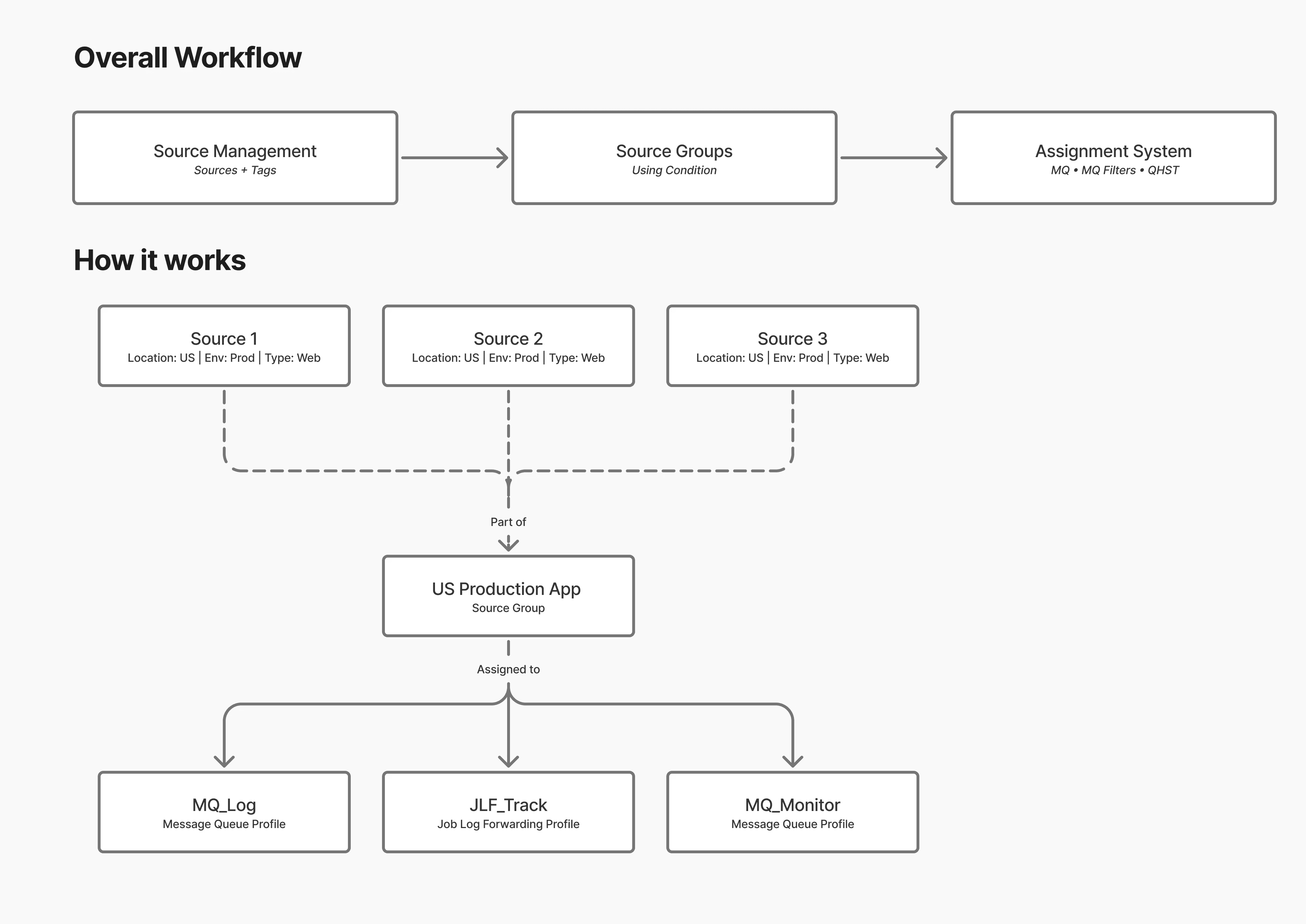
A clear pattern emerged. The workflow itself wasn't difficult to use, but the effort required to manage it increased as source inventories grew.
findings
Sources with similar configurations had to be created individually
Common configuration patterns were recreated multiple times
Large source inventories lacked a scalable organizational structure
Managing related sources required navigating individual records
IMPACT
Repetitive administrative effort
Slower setup and maintenance
Increased management overhead
Reduced efficiency at scale
04 STRATEGY
Designing for Growth
The findings made one thing clear: administrators didn't need a new workflow. They needed the current one to hold up at volume.
Rather than redesigning the experience, I focused on extending it, reducing effort while staying consistent with existing validation rules and platform constraints.
These constraints led us to three guiding principles.
Scale Effort, Not Work
Managing more sources shouldn't require proportionally more effort.
Manage Growth
Growth shouldn't make the system harder to manage.
Build on What Already Works
Improve the experience without changing how people work.
These principles ultimately guided two areas of improvement.
SOURCE CREATION
Bulk Upload
Source Organization
Source Groups & Tags
The first reduced the effort required to configure large numbers of sources. The second provided a scalable way to organize and manage growing source inventories.
05 SOLUTION
Scale Effort, Not Work
One of the biggest challenges uncovered during discovery was the effort required to create and maintain large numbers of sources.
While the existing workflow worked well for smaller environments, onboarding at scale meant repeating the same actions over and over again.
To reduce that effort, I designed a Bulk Upload workflow.

Instead of creating sources individually, admins upload source information through a structured CSV import, turning onboarding from a repetitive manual task into a scalable one.
As source creation got faster, the cost of mistakes grew too. A single formatting issue could affect dozens of records. So validation became a core part of the import experience itself.

Rather than discovering issues after sources were created, administrators received clear feedback before completing the import.
Together, bulk upload and validation reduced the effort required to onboard large numbers of sources while giving administrators confidence in the outcome.
Manage Growth
Creating sources efficiently solved only part of the problem. As environments expanded, admins also needed a better way to organize and maintain growing inventories.
To create that foundation, I introduced Tags.

Tags allowed administrators to categorize sources using attributes that reflected how their environments were structured. This created a flexible layer of organization that could evolve alongside the environment.
Once sources could be categorized, the next challenge was managing them as collections rather than individual records.
To address this, I designed Source Groups.

Admins define rules, conditions on tag values with a Match All / Match Any toggle, that determine which sources belong together.
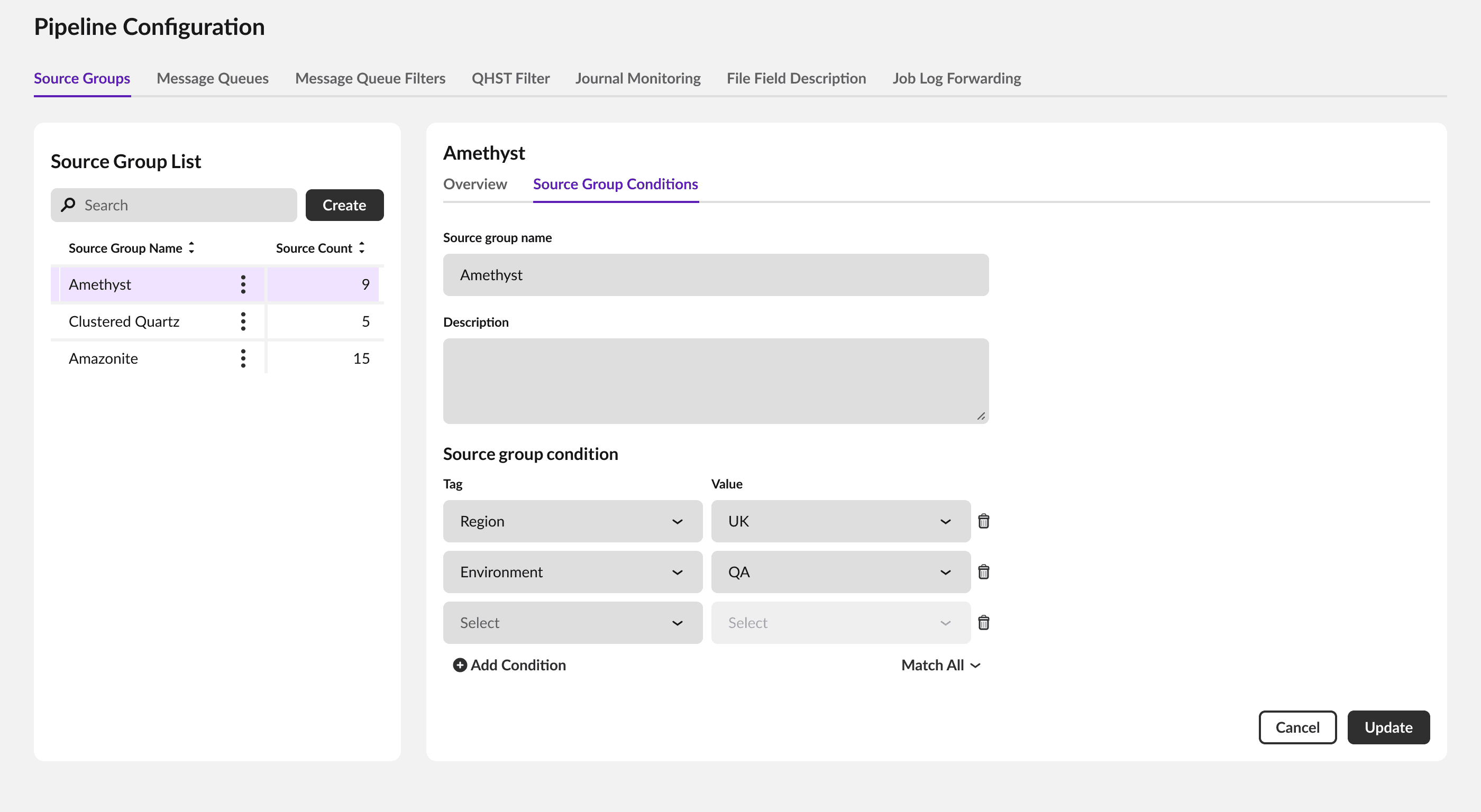
As sources matched those rules, group membership was updated automatically.
Together, Tags and Source Groups helped administrators manage growing source inventories without increasing operational overhead.
Build on What Already Works
Rather than redesigning the source management experience from the ground up, each improvement was integrated into workflows administrators already understood.
Bulk Upload extended the existing source creation process, validation provided guidance within the workflow itself, and source organization built on familiar concepts rather than introducing entirely new systems.
That's what let the experience scale without adding complexity for the people managing it.
06 OUTCOME
Making Growth More Manageable
The work focused on a simple challenge:
helping source management scale without increasing complexity for administrators.
Rather than introducing an entirely new workflow, the solution extended existing patterns to better support growing environments.
PRODUCT IMPACT
Faster onboarding of large source inventories, 400+ sources onboarded through a single bulk import instead of one-by-one entry
More flexible source organization
Better support for enterprise-scale environments
More maintainable source management workflows
OPERATIONAL IMPACT
Reduced repetitive setup work, an estimated 1-2 hours saved per 400-source bulk onboarding batch versus manual entry
Lower maintenance overhead
Greater confidence during source creation
Less manual effort required to manage source groups
The solution wasn't about changing how administrators worked. It was about helping existing workflows scale alongside the environments they managed.
07 REFLECTION
The biggest lesson from this project was that growth often exposes problems that functionality alone cannot solve.
DESIGNING FOR SCALE IS A DIFFERENT PROBLEM
Administrators already had the tools they needed to manage sources.
The challenge wasn't missing functionality—it was that existing workflows required more effort as environments grew.
This project reinforced the importance of evaluating how experiences behave at scale, not just how they work in isolation.
SIMPLE WORKFLOWS CAN SUPPORT COMPLEX SYSTEMS
Enterprise products often need to support complex environments, but complexity doesn't always require more interface.
By improving organization and reducing manual effort, the experience became easier to manage without changing how administrators worked.

